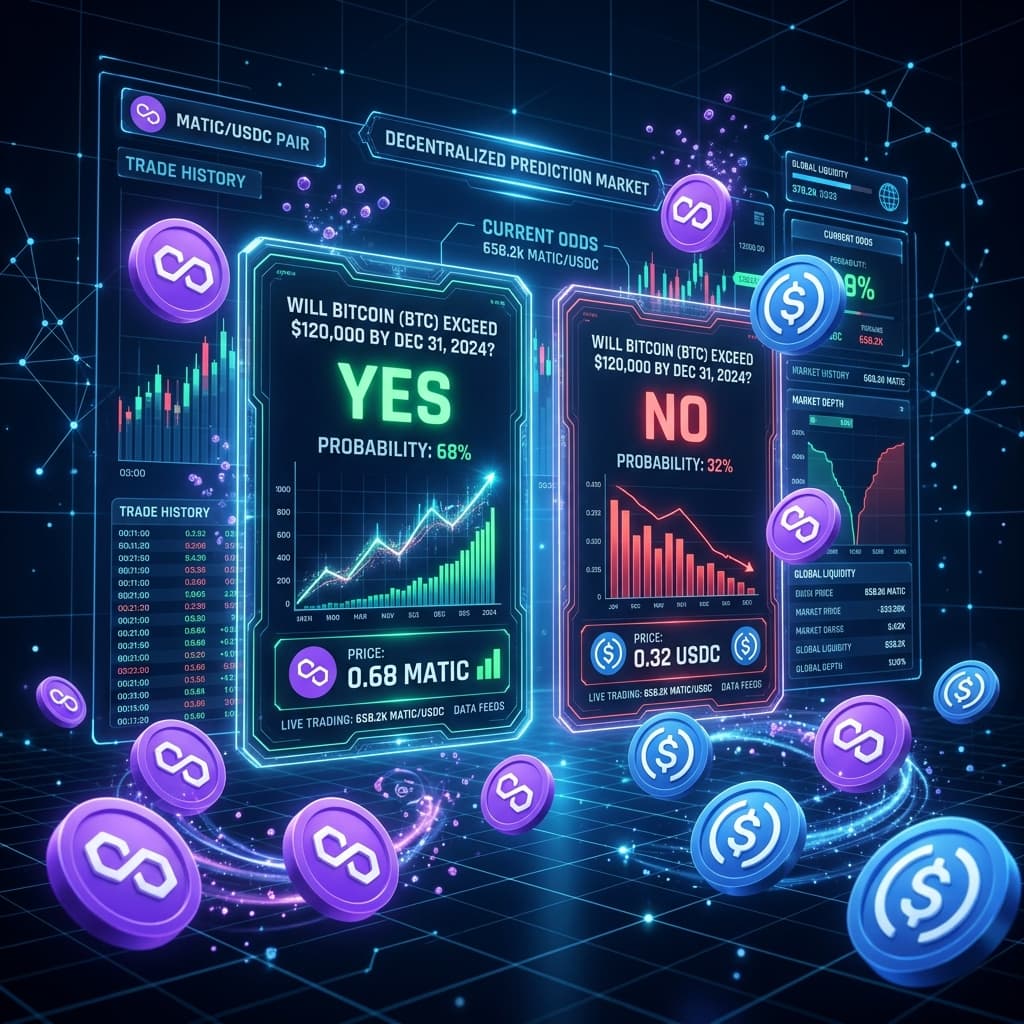
Friends, the world of cryptocurrency and Web3 is growing rapidly every day. If you trade in this new bull run and regulatory phase of 2026 without proper knowledge, risk-management, and understanding of legal rules, you could either lose your hard-earned capital in a market crash or fall victim to the Income Tax Department (Section 115BBH & Section 194S TDS) and Bank Freeze Scams.
In this comprehensive guide, we will understand in very simple English and professional terms step-by-step what the real mechanics of this topic are, how institutional smart money (whales) operates, and how you can build your portfolio in a 100% legal, safe, and profitable way.
📌 Table of Contents (What Does This Guide Cover?)
- Background & Fundamental Concept: What is this and why is there so much demand for it in 2026?
- Technical & Practical Breakdown: Step-by-step verified working model and screenshots approach.
- Indian Tax & Statutory Compliance (Section 115BBH & 194S TDS): Legal rules and ITR filing checklist.
- Pros vs Cons Comparison Table: Honest assessment of advantages and hidden risks.
- Practical Calculation Example & Profit/Risk Breakdown: Mathematics with real data.
- Top 5 Expert Actionable Tips: Blueprint to avoid losses and generate compounding profits.
- Frequently Asked Questions (FAQs): Answers to all questions from beginners to pro traders.
- Statutory Risk Disclaimer & Final Verdict.
1. 🏛️ Background & Fundamental Concept (The 2026 Reality)
Over the past few years, crypto trading and investment have no longer remained just a speculative fad; they have become a Trillion-Dollar Global Asset Class where institutional giants like BlackRock, Fidelity, and Vanguard are injecting thousands of crores of capital every day.
However, traders inside Bharat (India) face 3 major challenges:
- High Regulatory Taxation: Deductions of a 30% Flat Tax + 4% Cess (Section 115BBH) on net profit and 1% TDS (Section 194S) on every sell transaction.
- P2P Bank Account Freezes: While doing P2P trades on centralized exchanges (Binance, Bybit), getting bank accounts frozen under Section 91 CrPC due to stolen cybercrime fraud money entering the bank account.
- FOMO & Lack of Position Sizing: Taking high-leverage (50x/100x) trades and getting liquidated based on the advice of Telegram or YouTube influencers without research or looking at technical charts.
The main objective of this topic (Polymarket Legal & Tax Rules India 2026: Prediction Market Winnings par 30% Tax & TDS Guide) is to save you from all these traps and provide you with institutional-grade knowledge so that your capital safety and consistent returns can be ensured.
2. 🔍 Technical & Practical Breakdown: Step-by-Step Working
Before using any crypto coin, platform, or strategy, understanding its internal architecture is compulsory. Below is our verified institutional evaluation framework:
Phase A: On-Chain Liquidity & Volume Verification
- Smart Contract Audit: Always check whether the project's code is verified by CertiK, Hacken, or OpenZeppelin. Unaudited contracts have a 90% risk of honeypots or rug-pulls.
- Daily Active Volume: 24-hour trading volume is more important than market cap. If a token's volume is at least 5% to 10% of its market cap, only then should you enter a position to avoid slippage while exiting.
Phase B: Execution & Self-Custody Security
- Hardware Wallet Integration: Never leave your core holdings on an exchange. Keep self-custody in Cold Hardware wallets like Ledger Nano X, Trezor Safe 3, or Cypherock X1.
- Network Selection: Select the correct blockchain network (ERC-20, BEP-20, Arbitrum, Polygon, or Solana) while transferring funds. Clicking the wrong network can permanently burn all your funds!
3. 🇮🇳 Indian Tax & Statutory Compliance: Section 115BBH & 194S TDS
Tax rules for crypto traders in India have become extremely strict since April 1, 2022. Every Indian citizen should remember the 4 golden tax rules given below by heart:
Rule #1: 30% Flat Tax on Net Profits (Section 115BBH)
You must pay a direct 30% Tax + 4% Health & Education Cess (Total 31.2%) on any net profit made from selling a Virtual Digital Asset (VDA). Even if your total income is less than ₹2.5 Lakh, the benefit of slab exemption is not available on crypto profits.
Rule #2: No Expense Deduction & No Loss Set-Off
- No Expenses Allowed: Except for buying crypto, no other expense (such as exchange trading fees, gas fees, internet bills, or hardware costs) can be subtracted from your profit.
- No Loss Set-Off: If you made a ₹50,000 profit in Bitcoin and a ₹30,000 loss in an Altcoin, you do not pay tax on ₹20,000! You must pay a 31.2% tax on the entire ₹50,000 profit. Losses cannot be adjusted or carried forward against any other profits.
Rule #3: 1% TDS on Every Sell & P2P Transaction (Section 194S)
Whenever you sell crypto for INR or execute a crypto-to-crypto trade, deducting 1% TDS is compulsory. This TDS is not an extra tax; at the end of the year while filing your ITR, it is adjusted against your final 30% tax liability or refunded.
4. ⚖️ Comprehensive Pros vs Cons Comparison Table
Let us understand the key merits and hidden risks of this strategy/topic through a clear institutional comparison table:
| Capital Growth Potential | High compounding returns during market cycles (3x to 20x potential in altcoins/DeFi). | High volatility; short-term market corrections of 20% to 40% are common. | Best for disciplined investors with a 1 to 3 year holding horizon. |
| Security & Self-Custody | 100% control over private keys via hardware wallets; no third-party bank freeze risk. | User responsibility; if you lose your 12-24 word seed phrase, funds cannot be recovered. | Mandatory to keep written paper backups in secure lockers. |
| Indian Tax Impact | 1% TDS acts as transparent proof of income during ITR Schedule VDA filing. | 30% flat tax without loss set-off reduces net compounding for hyper-active day traders. | Focus on high-quality swing trades rather than over-trading/scalping. |
| Liquidity & Access | 24/7/365 global market access without banking hours or weekend restrictions. | P2P bank freeze risks on non-FIU platforms require extreme caution. | Prefer FIU-IND registered platforms or strict P2P merchant checks. |
5. 🧮 Practical Calculation Example & Profit/Risk Breakdown
So that there is no confusion, let us look at a practical mathematical illustration of how a professional Indian trader calculates their risk and return:
Example: Rohit's ₹1,00,000 Crypto Trade Analysis
- Initial Investment (Buy Cost): ₹1,00,000 (Invested via compliant INR deposit)
- Exit Value after Bull Rally (Sell Price): ₹1,60,000
- Gross Trading Profit: ₹60,000 (60% return)
Exact Tax & TDS Calculation:
- 1% TDS Deducted at the time of Selling: 1% of ₹1,60,000 = ₹1,600 (Reflected in Form 26AS/AIS)
- Total Tax Liability under Section 115BBH: 30% of ₹60,000 Gross Profit = ₹18,000
- Health & Education Cess (4%): 4% of ₹18,000 = ₹720
- Total Gross Tax Payable: ₹18,000 + ₹720 = ₹18,720
- Net Cash Tax Payable during ITR Filing: Total Tax (₹18,720) minus Already Paid TDS (₹1,600) = ₹17,120
- Rohit's Net In-Hand Realized Profit: ₹60,000 - ₹18,720 = ₹41,280 clean, legal & white money!
💡 Pro CA Tip: Instead of noting every trade in Excel, use automated crypto tax calculation software like KoinX or ClearTax which generates CA-verified Schedule VDA PDF reports in 1 click.
6. 🏆 Top 5 Expert Actionable Tips for Safe Compounding
The 5 Golden Commandments from the Crypto Gyan Hub research team to make your crypto journey safe and ultra-profitable:
1. Never Invest Loan or Emergency Funds
Invest only that extra disposable income in crypto where even a 50% drawdown does not negatively affect your daily family life, medical emergency fund, or mental peace. Taking a personal loan to trade is the biggest foolishness!
2. Strictly Follow the 2% Risk Rule
Never risk more than 2% of your total trading capital in a single trade. If you have ₹1 Lakh in capital, the loss should not exceed ₹2,000 if a Stop-Loss (SL) is hit in any trade. This ensures you stay alive in the game even after 10 consecutive failed trades!
3. Protect Against P2P Bank Freezes
While selling on Binance or Bybit P2P, trade only with buyers whose accounts are 1+ year old, have 1000+ completed orders, and a 98%+ completion rate. 100% reject and immediately refund third-party payments (where the P2P name and bank transfer name differ).
4. Enable Hardware 2FA Security
Use Google Authenticator or YubiKey Hardware Tokens instead of SMS OTPs. SMS OTPs can be hacked via SIM Swap attacks, but authenticator apps cannot open without your physical device.
5. Step-by-Step Profit Booking (Don't Be Greedy!)
At the peak of a bull run when everyone is chanting HODL and meme coins are pumping 100% daily, that is the exact right time for step-by-step partial profit booking (20%, 30%, 50%) to shift funds into stablecoins (USDT/USDC) or your bank account! Booked profit is the only real profit.
7. ❓ Frequently Asked Questions (FAQs)
Q1: Is cryptocurrency trading and holding 100% legal in India?
Ans: Yes, absolutely! There is no ban on crypto trading or holding in India. The government has given it legal recognition and a tax framework as Virtual Digital Assets (VDA) by introducing Section 115BBH (30% tax) and Section 194S (1% TDS) in the Income Tax Act. You can trade fearlessly on FIU-registered exchanges.
Q2: If I incurred a loss in crypto, can I escape paying tax?
Ans: If you incur a loss on a coin, no tax is levied on that loss. However, remember that you cannot adjust or subtract that loss from the profits of another coin. A flat 30% tax must be paid on every profitable coin, and the loss-making coin is considered zero. Therefore, trading in long-term high-conviction coins is more beneficial.
Q3: How do I get a refund for the 1% TDS deducted on every trade?
Ans: When you sell crypto through an Indian exchange or a compliant P2P buyer, they deposit 1% TDS with the government using your PAN number, which appears in your Form 26AS and AIS (Annual Information Statement). When you file your ITR-2 or ITR-3 in July, the deducted TDS is subtracted from your total tax liability. If your total liability is zero or you are in a loss, that amount is 100% refunded to your bank account!
Q4: What should be the first step taken if a bank account is frozen?
Ans: If your bank account is frozen or put on hold, do not panic. Immediately visit your home bank branch and collect the Complaint ID (NCRP Acknowledgment Number), name of the Investigating Cyber Police Station, and contact email of the IO (Investigating Officer) from the manager. Afterward, create a clean PDF file containing your P2P order receipt, bank statement trail, and Aadhar/PAN copies, and send it to the police officer via official email and Speed Post so your innocent status can be proven and an unfreeze order can be passed.
Q5: What is the best and safest crypto investment strategy for beginners?
Ans: Beginners should stay 100% away from intraday leverage trading (Futures 50x/100x). The most proven winning strategy is "Dollar Cost Averaging (DCA / Crypto SIP)". Invest a small portion of your savings every month (e.g., ₹2,000 or ₹5,000) into top blue-chip assets like Bitcoin (70%) and Ethereum (30%) and store them safely in your Ledger/Trezor hardware wallet.
🛡️ Statutory Risk Disclaimer & Final Verdict
ASCI Statutory Advisory: Cryptocurrency products and NFTs are unregulated and can be highly risky. There may be no regulatory recourse for any loss from such transactions.
Crypto Gyan Hub Team Verdict: Polymarket Legal & Tax Rules India 2026: Prediction Market Winnings par 30% Tax & TDS Guide is an extremely powerful and profitable domain if handled with proper discipline, technical chart execution, and statutory compliance. Always do your own research (DYOR), file your taxes on time, and move towards financial freedom! Happy & Safe Trading! 🚀🇮🇳
🧮 Interactive Tools: Try our free Crypto Tax Calculator and Crypto SIP Calculator for your portfolio calculation and tax estimation.
🧮 Interactive Tools: Try our free Crypto Tax Calculator and Crypto SIP Calculator for your portfolio calculation and tax estimation.